
Choosing the right parts for a ceiling pendant light is easier when you work from the ceiling down.
Whether you're making a simple single pendant, creating a fitting for a particular lampshade or designing a large multi-drop stairwell light, the process is much the same.
At Lampfix, we supply specialist ceiling roses, lighting cable, lampholders and other components to lighting makers, restorers and customers working on individual projects. We can also assemble your chosen pendant components for you.
There are five main decisions:
Choose your ceiling rose.
Plan the cable drops.
Choose the right cable.
Choose your lampholders and any shades.
Decide who will assemble the pendant.
The four main components are a ceiling rose, cable, lampholder and lamp (light bulb). Depending on your design, you may also need shade rings, adaptors or additional suspension components.
The photographs below show the four basic components and what you need to consider when choosing them.
The 4 Main Parts Of The Pendant Light You Need To Consider


Once you know the four basic components, start at the ceiling and work down.
Step 1: Choose your ceiling rose
Start by choosing a ceiling rose that suits the size, style and number of drops you want.
For a simple single-drop pendant, you can usually choose a suitable rose in your preferred finish, then select compatible cable and lampholder components.
For a multi-drop or stairwell pendant, think about:
How many cable drops you want.
Where you want those drops positioned.
How far each drop needs to hang.
Whether the finished fitting will include lampshades.
For larger designs, our giant ceiling roses, including 450mm and 670mm options, allow you to create spirals, perimeter arrangements and other multi-drop designs.
Planning outlets on a larger rose
On selected giant ceiling roses, our standard outlet positions are 30mm from the edge, evenly spaced around the perimeter.
If that suits your design, select the required number of outlets when ordering.
If you need particular positions or a layout based on your own drawing, select the Custom Layout / Setup option where available.
Remember to allow enough space between neighbouring drops, particularly when using lampshades.
For larger or heavier pendants, the ceiling structure, mounting arrangement and fixings must be suitable for the complete suspended weight. Check the installation information for the individual ceiling rose.
Step 2: Plan your drops and choose the cable
Decide how you want the finished pendant to hang.
You might choose drops at the same height, a gradual spiral, different heights or a more irregular arrangement.
For a spiral, decide the shortest and longest drops first.
You can calculate an even increase using:
(Longest drop − shortest drop) ÷ (number of drops − 1)
For example, five drops ranging from 0.8m to 2m would increase by 0.3m each time.
Add the individual drop lengths together to calculate approximately how much cable you need, allowing extra for connections, adjustments and trimming.
Once you've chosen your lengths, you can browse our lighting cable and flex range to find the finish you want.
Choosing the right cable
0.75mm² flex is commonly used for pendant lighting, but the correct cable depends on the finished fitting.
Consider the electrical rating, insulation, temperature requirements, number of cores and whether the cable forms part of the suspension arrangement.
If the fitting requires protective earthing, suitable provision must be made to earth the relevant conductive parts. A three-core cable alone doesn't establish that a complete fitting is correctly earthed.
Similarly, a fitting isn't automatically Class II simply because it has a two-core cable.
The cable, lampholders, ceiling rose and any other components must be compatible with the intended electrical construction.
If you're unsure whether you need 0.5mm² or 0.75mm² flex, or whether two-core or three-core cable is appropriate, contact us before ordering.
It's much easier to establish compatibility before purchasing than to change components afterwards.
Step 3: Choose your lampholder
Next, choose the lampholder that will sit at the end of each cable.
If you're not using a lampshade, your main decisions are normally:
Lamp cap — such as ES, SES, BC or SBC.
Metal or plastic construction.
Finish and appearance.
Cable-entry and mounting arrangement.
If you're using a shade, you also need to check how it attaches to the lampholder.
Measure the diameter of the shade's fitting hole, where the lampholder passes through or supports the shade.
The table below shows the common shade-opening sizes and the types of lampholders that may be suitable.


These sizes are a useful starting point, but the actual lampholder and shade must be compatible.
As a general guide:
40mm openings commonly suit E27/ES shade-compatible lampholders. Some smaller lampholders can also be used with suitable shade-reducing rings.
29–30mm openings commonly suit BC/B22 and certain SES/E14 lampholders.
Smaller or unusual openings may need a specialist lampholder, adaptor or alternative mounting arrangement.
Always check the actual dimensions and the method of securing the shade. The lamp cap size alone doesn't determine whether a lampholder will fit a particular shade.
Also check whether the lampholder includes shade rings or whether these need to be ordered separately.
For particularly heavy shades, the suspension arrangement is just as important as the lampholder. Don't assume that an ordinary cordgrip lampholder or decorative cable can support any shade weight. Some designs require separate mechanical support.
If you're unsure, send us a photograph of the shade, its fitting-hole diameter and approximate weight. We'll help identify a suitable arrangement where we can.
For more detail, see our guide to choosing a cordgrip lampholder.
Check the lamp cap as well
If you already have the bulb you want to use, make sure its cap matches the lampholder.


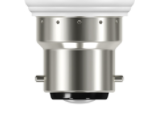

The bulb-cap dimensions in the table above describe how the bulb fits into its lampholder. They are different from the shade-opening dimensions discussed earlier.
Once you've selected compatible components, the next decision is how the pendant will be assembled.
Step 4: Decide who will assemble it
You now have the main components:
Ceiling rose
Cable
Lampholder
Shade, if required
Lamp or light bulb
You can order these individually and arrange for assembly by a competent person.
Alternatively, Lampfix can assemble and electrically test your chosen pendant components before dispatch.
Lampfix Pendant Assembly Make Up Service
Our Pendant Assembly Make Up Service is designed for customers who want us to put their selected ceiling rose, cable and lampholders together.
It can be particularly useful for multi-drop pendants, stairwell fittings and projects where several assemblies need to be made consistently.
When ordering, select the assembly service that matches the number of drops on your ceiling rose.
For example, a five-drop ceiling rose requires the five-drop assembly option.
Order one make-up service for each ceiling rose, along with the required components.
We'll assemble and test the pendant before dispatch.
For unusual or custom arrangements, contact us first to confirm what can be assembled using your chosen components.
What about installation?
Even when Lampfix assembles and tests your pendant, it still needs to be installed correctly.
A competent installer must establish that the ceiling structure, fixings, electrical installation and suspension arrangement are suitable for the finished fitting.
This is particularly important for larger giant ceiling roses and heavy multi-drop installations.
Always follow the relevant product-specific installation information.
Step 5: Check everything before ordering
Before completing your order, check the following.
Ceiling rose
Is it the correct size, shape, finish and number of outlets?
Outlet layout
For a multi-drop pendant, are the positions correct, or do you need a custom arrangement?
Cable
Have you calculated the total length, including an allowance for connections and adjustment? Is the cable suitable for the fitting?
Lampholders
Do they match the intended lamps, cable and any shades?
Shade rings and accessories
Have you included the rings, adaptors or other components required to secure the shades correctly?
Suspension
Is the complete fitting appropriately supported, particularly if it includes heavy shades or multiple drops?
Assembly
Are you arranging assembly yourself, or have you selected the correct Lampfix make-up service?
Once you're satisfied that everything is compatible, you can place your order.
Current delivery options and charges are displayed at checkout. Larger or custom assemblies may have additional packing or delivery requirements.
Not sure which parts work together?
That's exactly the sort of thing we can help with.
Whether you're creating a simple pendant, matching an existing lampshade or planning a larger lighting assembly, Lampfix can help identify the components you need.
Send us a photograph, drawing or the relevant dimensions. If you're designing a multi-drop pendant, let us know the number of drops and approximate lengths.
We'll help you work out a practical combination of ceiling rose, cable, lampholders and accessories.
Call us on 01462 731 173 or email sales@lampfix.co.uk.
You can also browse our ceiling roses, lighting cable, lampholders and Pendant Assembly Make Up Service on the Lampfix website.
This guide helps with component selection. Electrical assembly, testing and installation must be carried out by people competent for the work involved, with the finished fitting assessed against the applicable requirements.